The People · Contributors · Stephen B. Young
 Contributor · Chapter II
Stephen B. Young
Global Executive Director, Caux Round Table for Moral Capitalism
Values alone do not guide behavior. Principles do.From chapter II
Contributor · Chapter II
Global Executive Director, Caux Round Table for Moral Capitalism
Values alone do not guide behavior. Principles do.From chapter II
Stephen B. Young graduated from Harvard College and earned his JD degree from Harvard Law School. He was Assistant Dean for Student Affairs at Harvard Law School and Dean and Professor of Law at the Hamline University School of Law, and he has taught at the Carlson School of Management, University of Minnesota, and the Sasin School of Management at Chulalongkorn University, Bangkok. He wrote Moral Capitalism and The Way to Moral Capitalism and is Global Executive Director of the Caux Round Table for Moral Capitalism. In 2008 Sandra Waddock listed him among the 23 people who created the corporate social responsibility movement in The Difference Makers. In 1966 he discovered the Bronze Age culture of Ban Chiang in Northeast Thailand, now a UNESCO World Heritage site.
Chapter II · p. 18 · What this chapter is about
The philosophical foundation of human-centered entrepreneurship
Values declare intent. Principles determine action.
Written together
 Ayman ElTarabishyView page →Stephen B. YoungThis page
From the opening pages
In The Merchant of Venice (1600), Shakespeare captures a truth that still defines modern leadership: knowing what is right is far easier than doing it. It is a truth as uncomfortable as it is enduring. If knowledge alone were enough, organizations would already be human-centered, but they are not. Despite decades of frameworks, values statements, and leadership principles, a wide gap remains between what is understood and what is practiced. This gap between understanding and action is not incidental; it is the central challenge this chapter confronts in the context of Human-Centered Entrepreneurship (HCE). As the Roman poet Ovid observed long before Shakespeare, we may recognize and approve the better course yet still follow the worse (Ovid 2004, Book VII, lines 20–21).
The answer lies in principles. Values alone do not guide behavior. Principles do. Values declare intent, but principles determine action, especially under pressure and uncertainty when trade-offs are unavoidable. In those moments, organizations reveal what they truly stand for. Principles provide direction when rules fall short, and competing priorities collide. Without them, values become inconsistent and are easily overridden. Principles are what turn humanitas, the foundation of human-centeredness, into something that can be practiced in real decisions.
Excerpt shown with permission of Edward Elgar Publishing.

On the big screen at the forum in Korea
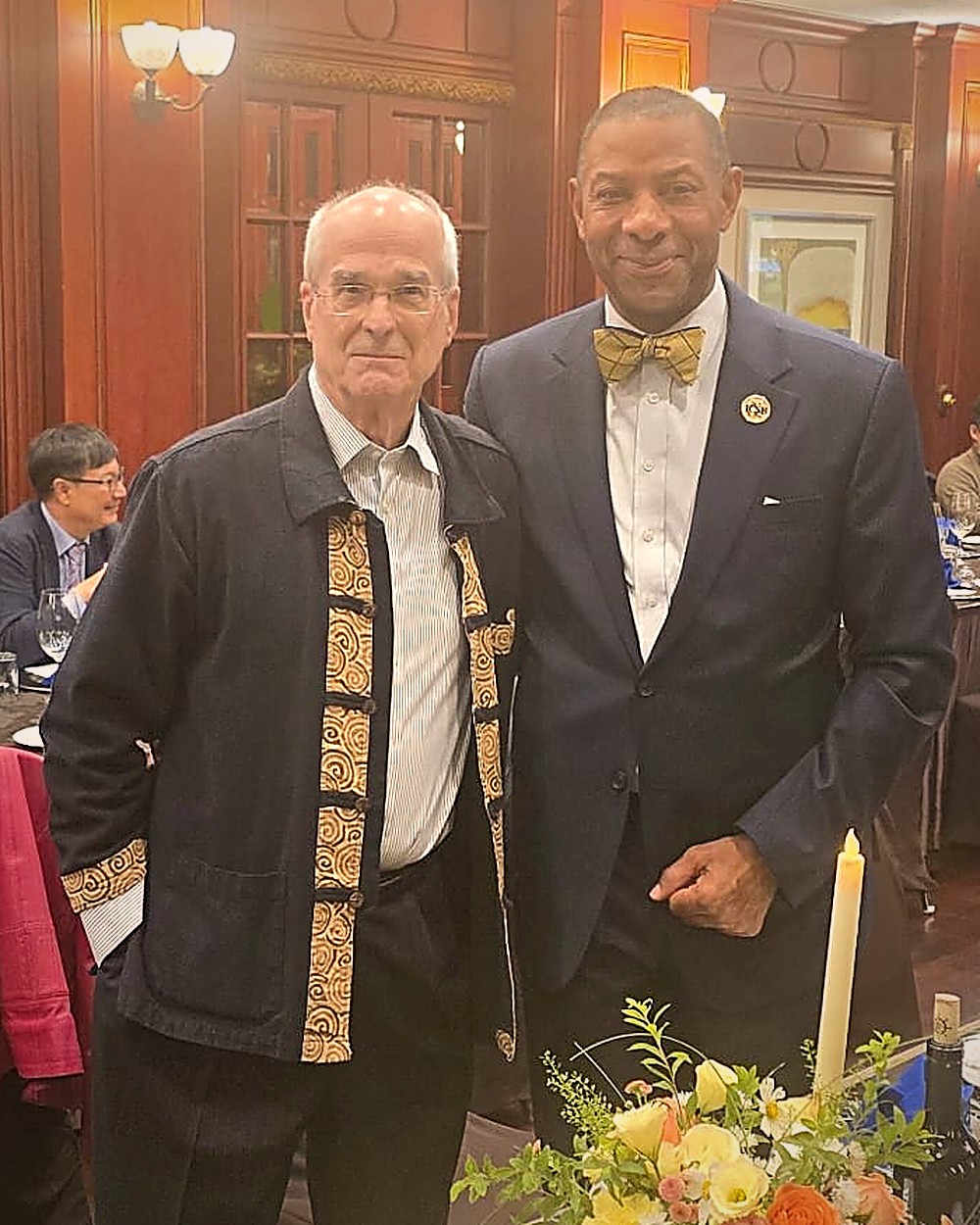
With Winslow Sargeant at the forum dinner in Korea
Last updated · November 2026