Surrender
The diploma mill
Credentials without capability. Degrees without depth.
Efficient and scalable, and it destroys what universities exist to do.
Chapter 15
What this chapter is about
If we reduce teaching to information transfer, AI wins.
Universities survived the printing press, industrialization, mass media and the internet. Each one challenged how they teach. Generative AI can do the teaching task itself.
Students and parents
Is a degree still worth it if AI can write the essay?
Take the final exam →
Teachers, at every level
My students keep asking what this knowledge is for. What do I tell them?
Meet the five generations →
Employers and managers
What should a graduate bring that a machine cannot?
See the three futures →
Everyone
When AI can do the thinking work, what part of us can’t be automated?
Follow the compass →
From the book · the opening pages
Chapter Fifteen
The world has organized 193 nations around the most ambitious institutional commitment to human flourishing in history, and only 17 percent of the SDG targets required by that commitment are currently on track. The transmission gap is real. The commitments exist. What is missing is an enterprise-level organizational culture capable of translating global intentions into daily practice. This chapter descends into the institution most directly responsible for producing that culture: the university.
Gen Z and Gen Alpha are the first generations born into what this book’s framework calls the Human Era, a paradigm shift, not a trend or a megatrend, in which the organizing values of human life shift from information and knowledge accumulation towards Meaning, Human Flourishing, and Harmony. They are not a management challenge for universities to solve. They are a signal that the university system has not yet learned to read.
Excerpt shown with permission of Edward Elgar Publishing.
The final exam · for every university
The chapter’s test is simple: does this task need human judgment about a person’s development? Decide each one, then see the answer in red ink.
{{t.task}}
{{t.mark}}
{{t.why}}
{{score}}
{{scoreLine}}
Quiz · Five generations walk onto campus
Your result appears here: what you value, what the university offers you, and how far your generation moves it toward human-centered.
You are {{gen.one}}.
For Gen Alpha, a university that cannot answer “what is this knowledge for?” will not be a disappointment. It will simply be irrelevant.
Source: Table 15.1. Birth years are indicative.
The Three E’s, built into the walls
Tenure is not a tradition. It is a decision, made and remade.
Enablement. Protecting intellectual freedom against the pressure to produce.
Sabbatical is not a perk. It is the time deep work requires.
Empathy. Recognizing that people need time to think, create, and recover.
Shared governance is not inefficient. It is Empowerment made constitutional.
Empowerment. Authority given to those closest to the work.
Leaders will be tempted to trade these protections for speed. The historical record suggests that trade rarely ends well.
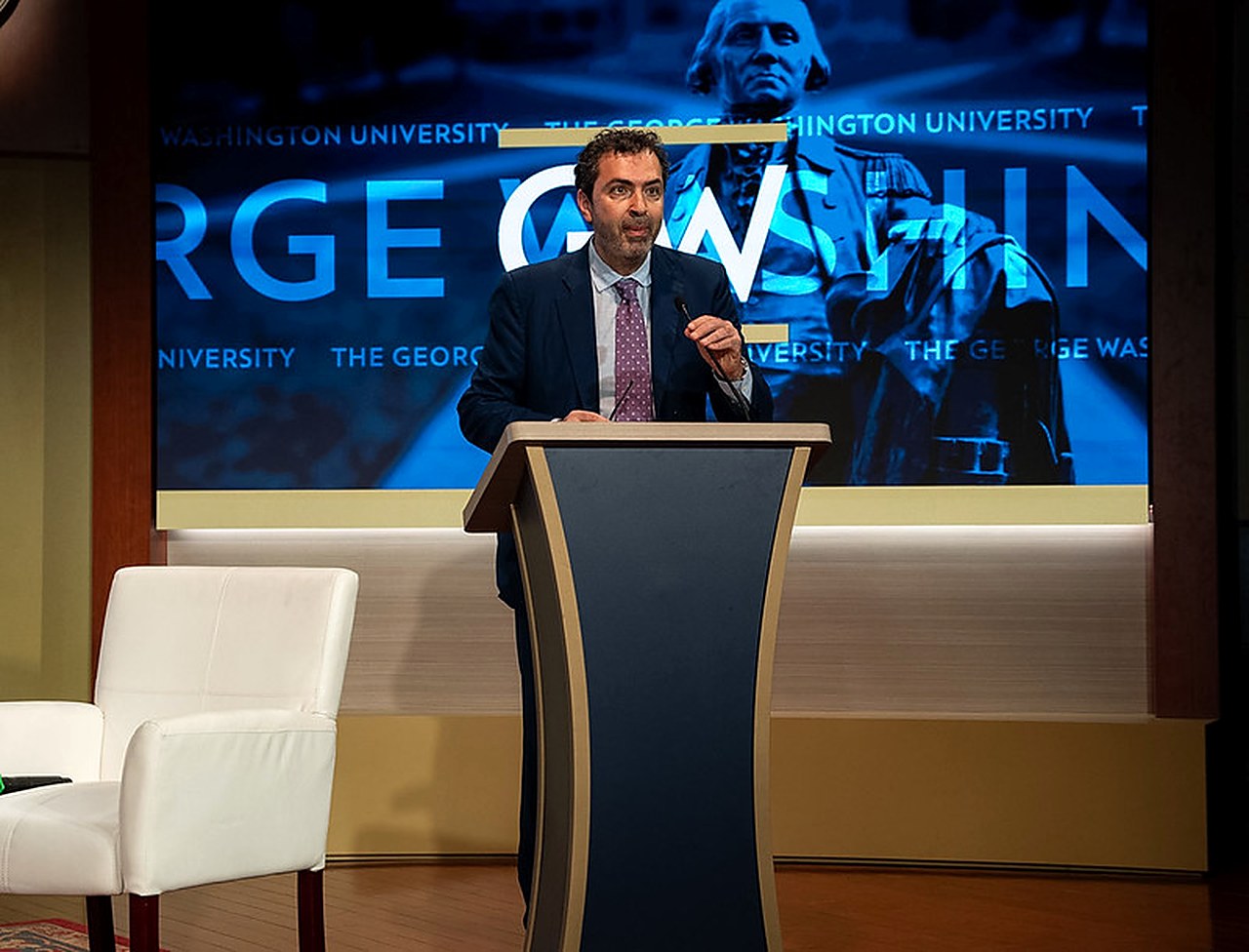
The protections that look slow are what let a university think.
Ayman ElTarabishy at the George Washington University
Control, surrender, or survive?
Control
AI takes the routine. Teachers take the mentorship, the dialogue, the judgment.
It works only with clarity about what is distinctly human.
Survive
It decides what is worth fighting for, and what it will never automate.
Not a technical question. A question about values, purpose, and what it means to be human.
A thousand years of reluctant innovation
At each turn the question was not how to preserve the past, but how to keep the mission of human development using new tools.
A compass for the future
Chapter Fifteen
{{pg.lead}}
{{pg.bold}}
{{pg.big}}
— {{pg.sign}}
Turn the page
About the author
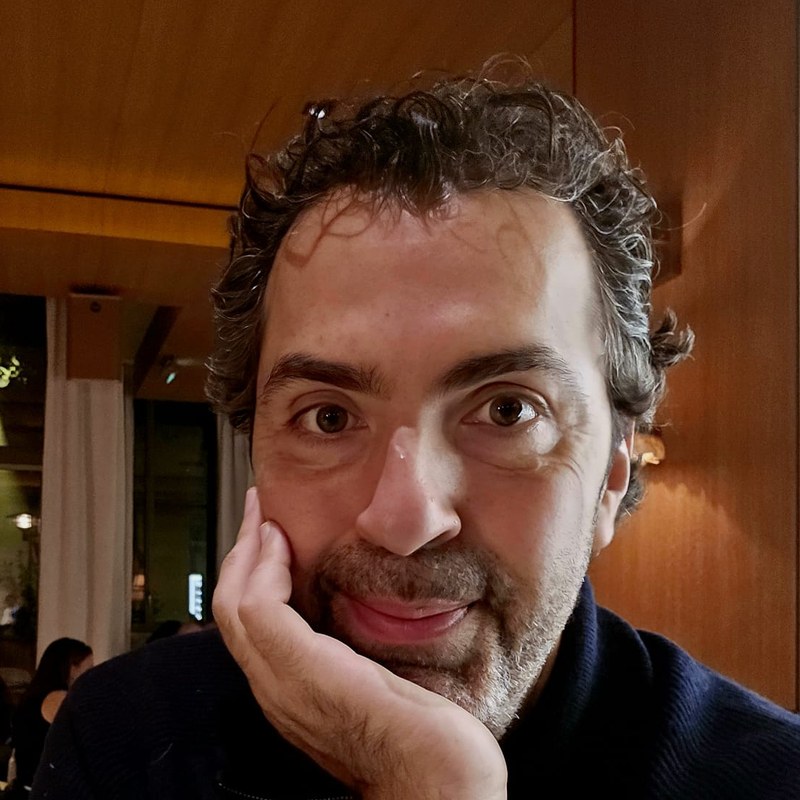
President and CEO, ICSB · Teaching Professor of Management, George Washington University School of Business
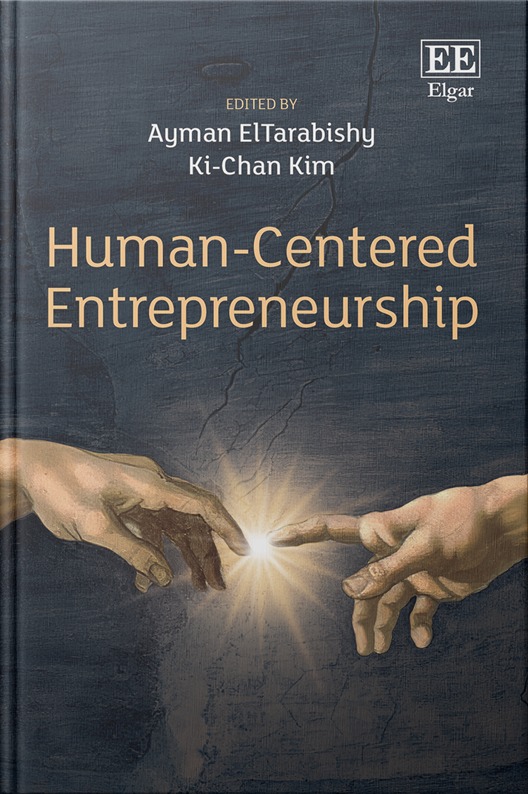
Ayman ElTarabishy is President and CEO of the International Council for Small Business and Editor-in-Chief of the Journal of Small Business Management. He has taught at the George Washington University School of Business for more than 25 years. With Ki-Chan Kim, he co-founded the theory of human-centered entrepreneurship, and he co-edited this book.
Full author profile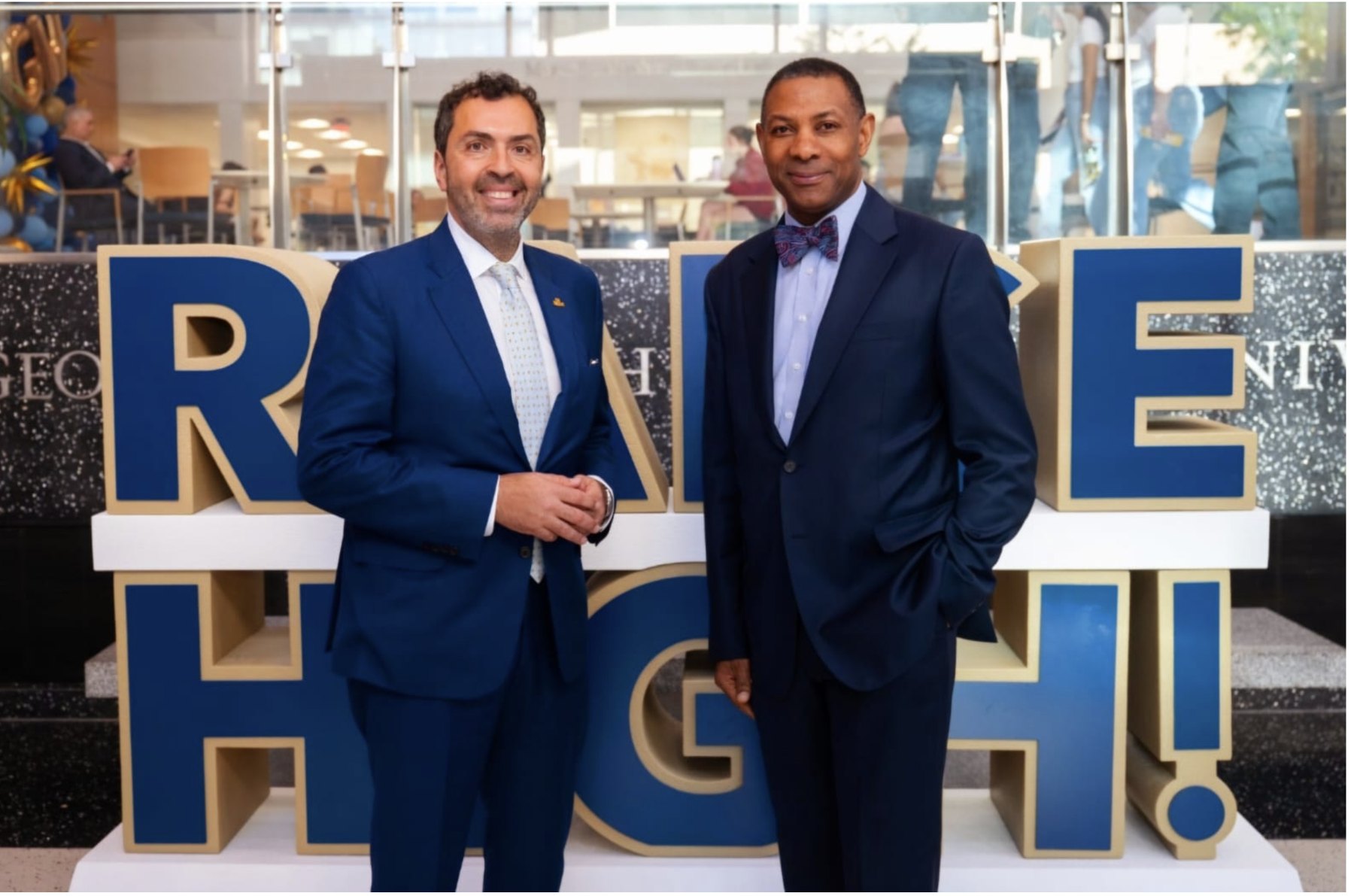
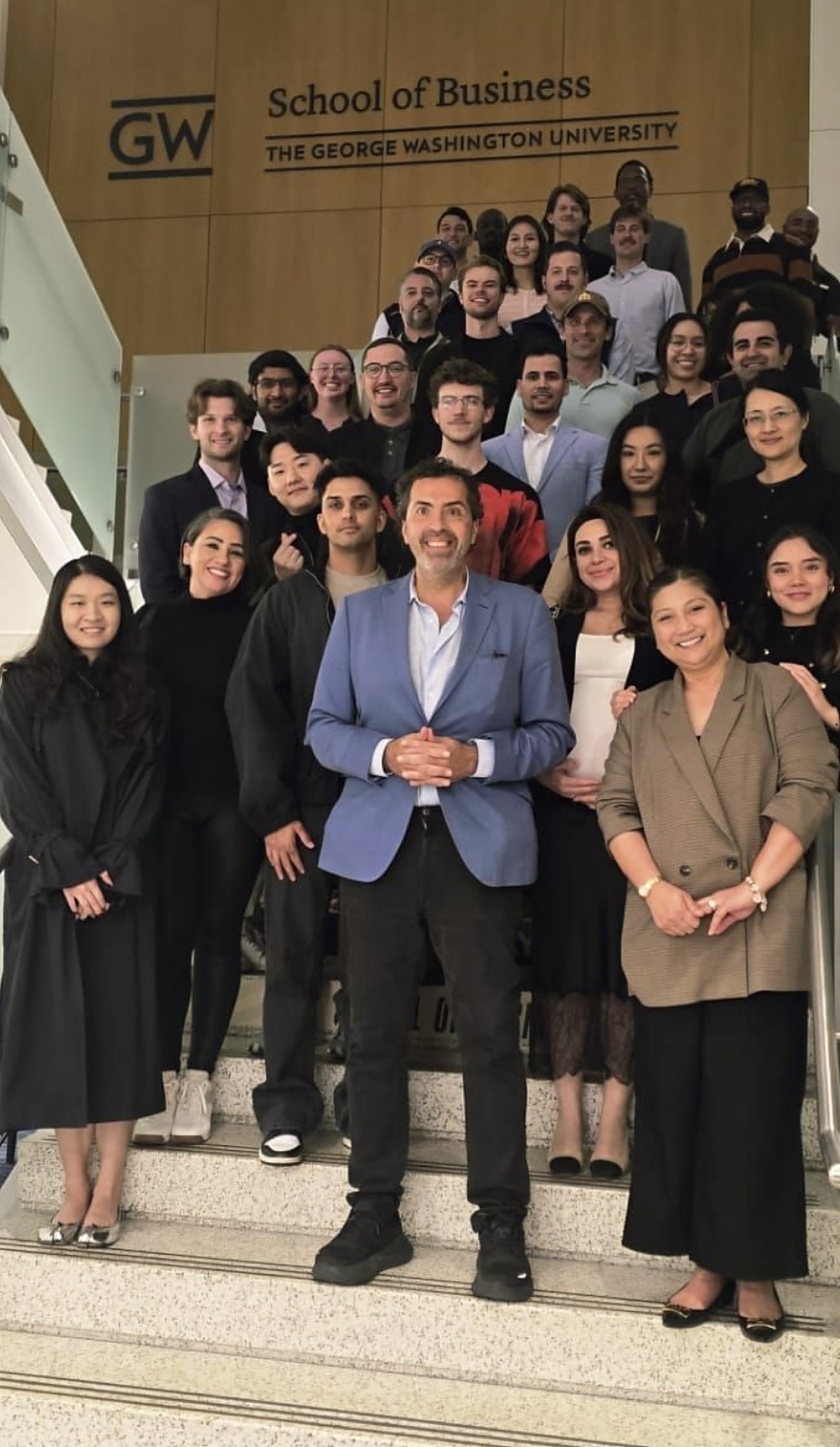
At The George Washington University
Raise High!
Ayman ElTarabishy and Winslow Sargeant at The George Washington University.
Where to go next
Beyond the Chapter
The printed text stays as written. New research, videos, and cases from the author appear here, dated and reviewed by the editors.
No updates yet.
For discussion
ElTarabishy, A. (2027). The soul of the university: Human-centered education in the age of generative AI. In A. ElTarabishy & K.-C. Kim (Eds.), Human-Centered Entrepreneurship (pp. 215–228). Edward Elgar Publishing.