Chapter Five
Five ideas to carry with you
{{pg.lead}}
{{pg.bold}}
{{pg.big}}
— {{pg.sign}}
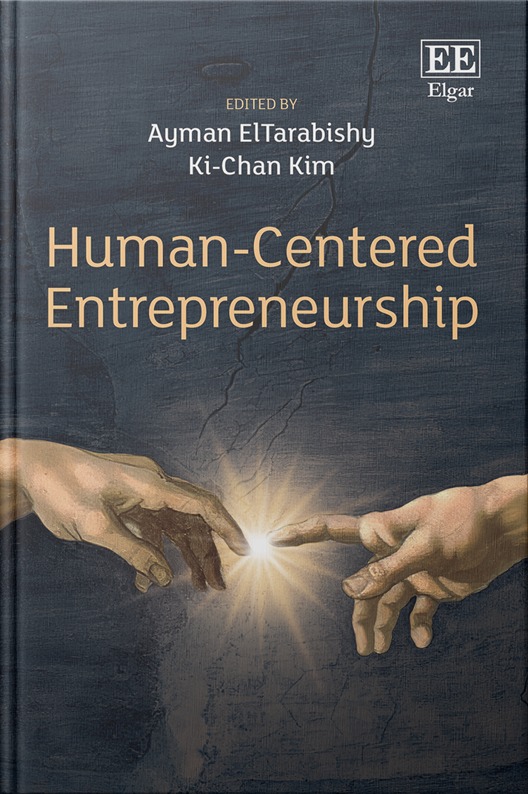
Human-Centered Entrepreneurship
ElTarabishy & Kim · Edward Elgar
Chapter 5
Rico Baldegger, Christophe Schmitt, and Zoran Bjelic
What this chapter is about
Sustainability without a human-centered culture buys compliance. With it, sustainability builds capability.
Culture decides whether sustainability pays off
Where the culture is strongly people-first, it goes hand in hand with better environmental results. Where it is weak, there is almost no link.
Strength of the link, from 0 to 1. Bjelic et al. (2024).
If your company has sustainability goals but little has really changed.
You’ll see what turns goals into capability.
If you are deciding whether to start with culture or with targets.
You’ll get the chapter’s answer on sequence.
If you fund or advise SMEs and wonder why results differ.
You’ll see why the same spending pays off so differently.
If you study strategy, the SDGs, or how firms learn.
You’ll get the model: two cycles and one amplifier.
From the book · the opening pages
The art of progress is to preserve order amid change and to preserve change amid order.Alfred North Whitehead, Adventures of Ideas (1933)
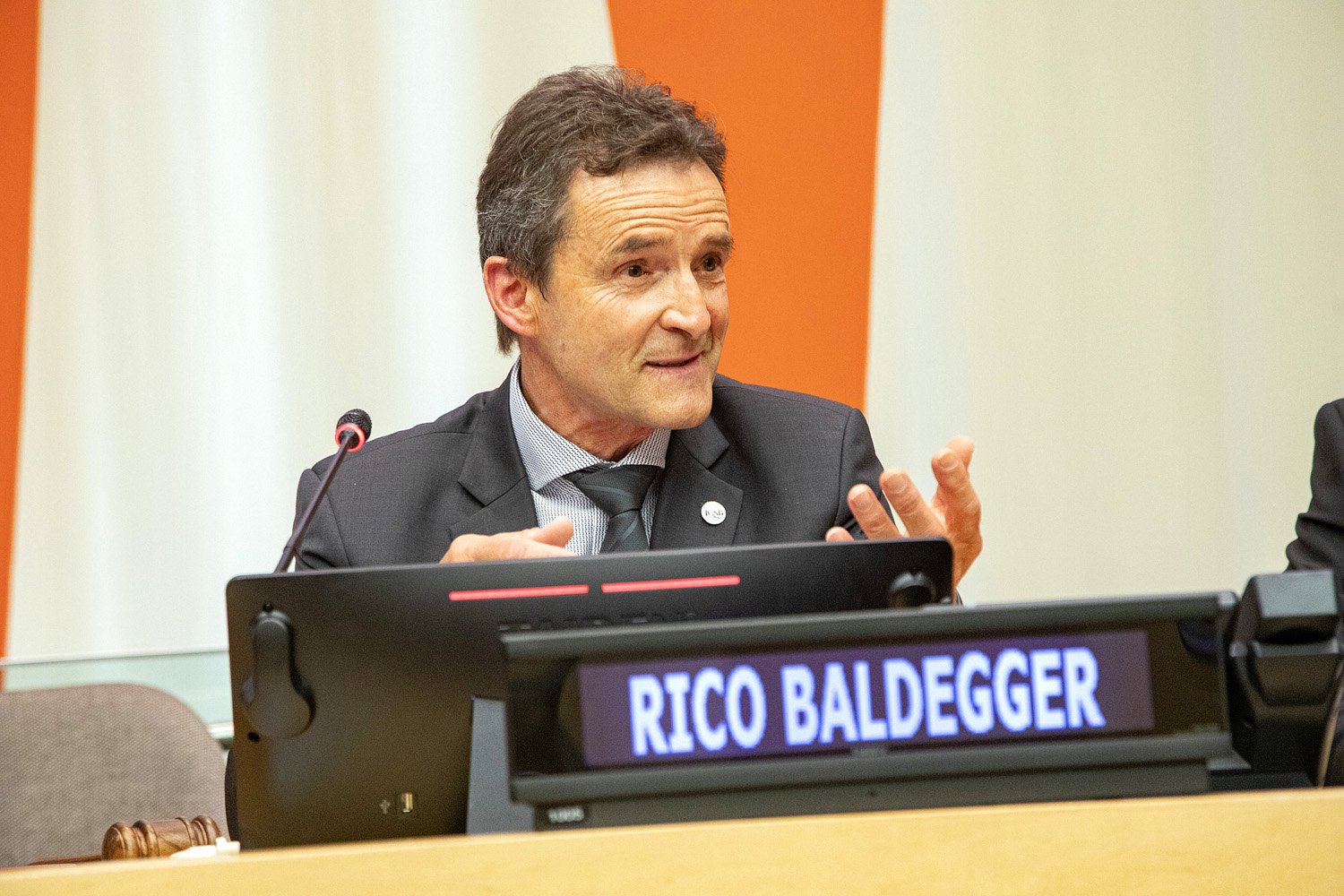
In the room · United Nations
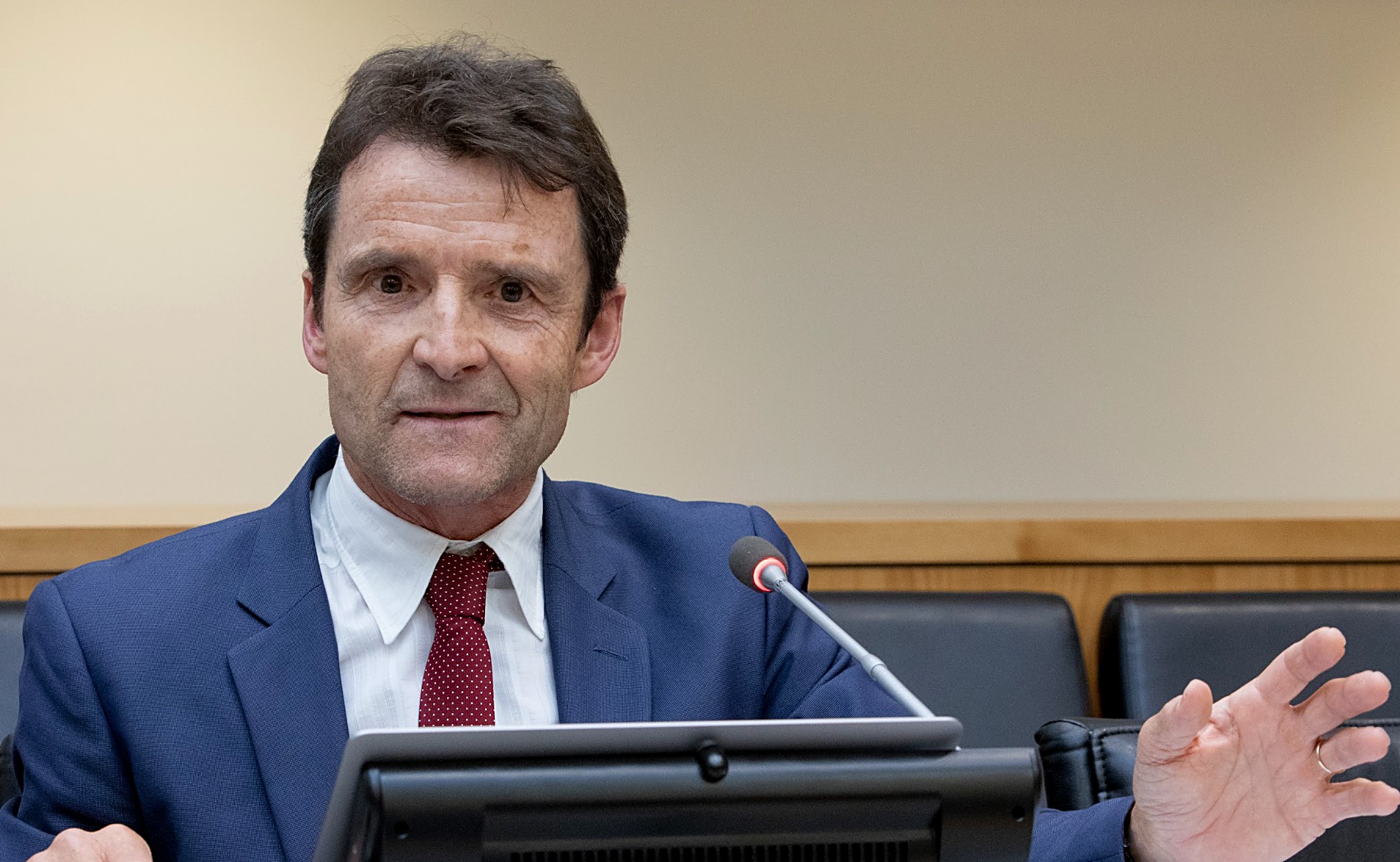
Rico Baldegger takes the floor.
Behind his own name plate at the United Nations.
The chapter’s core idea
The chapter sorts companies on two cycles: the drive to innovate, and putting people at the center. Pick the square that sounds like your company and see how much capability each unit of sustainability investment builds.
{{sel.axes}}
{{sel.name}}
{{sel.effect}}
{{sel.text}}
{{sel.example}}
Next step
{{sel.next}}
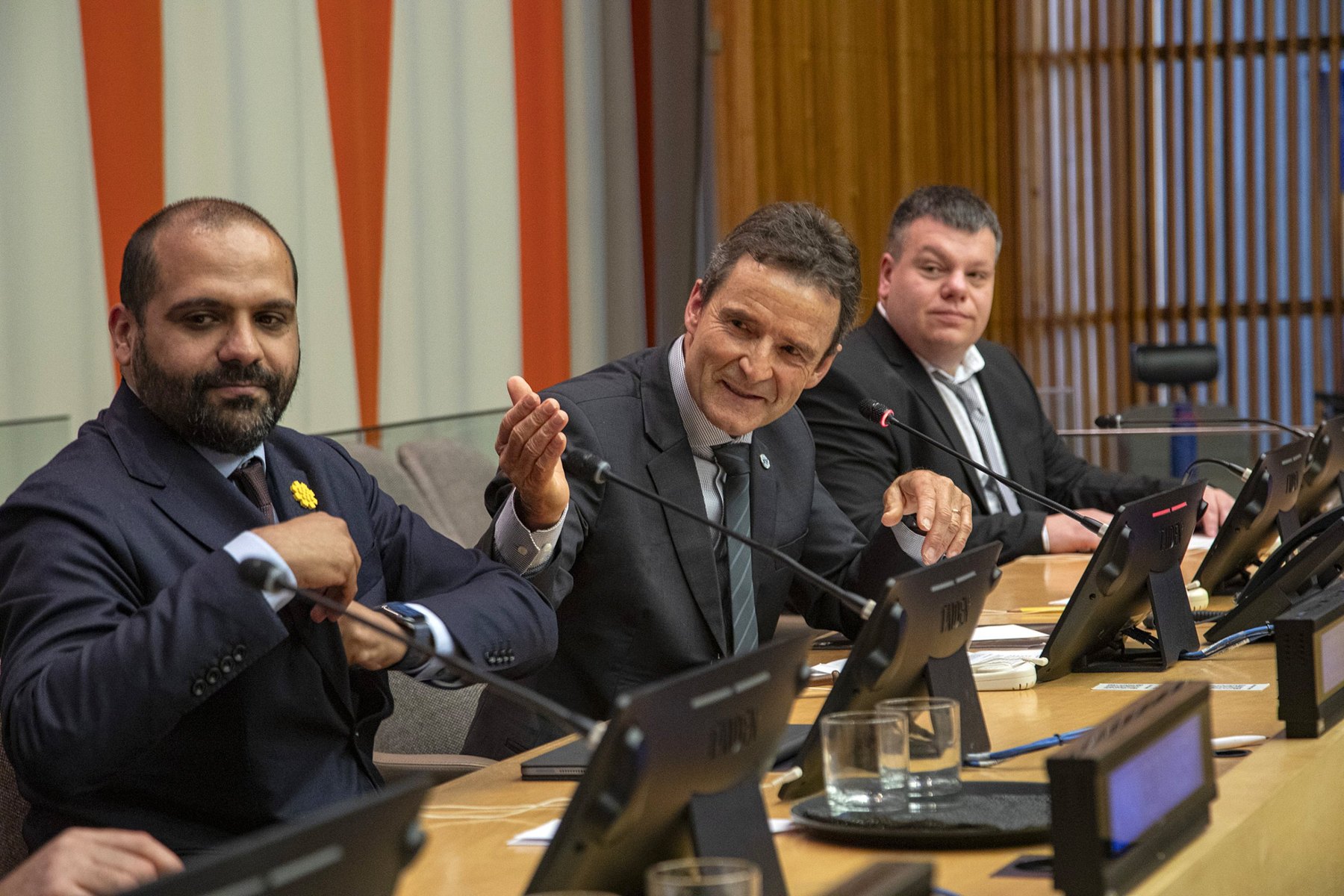
On the panel
Making the argument, one table at a time.
On the panel at the United Nations.
01
Sustainability builds capability through two paths at once.
02
03
From Table 5.1 in the chapter.
The warning Sustainability can widen the gap between strong and weak firms. For a company low on both cycles, the order matters: build the culture first, then set ambitious goals.
“Purpose fuels People, People drive Purpose.”The chapter’s mantra
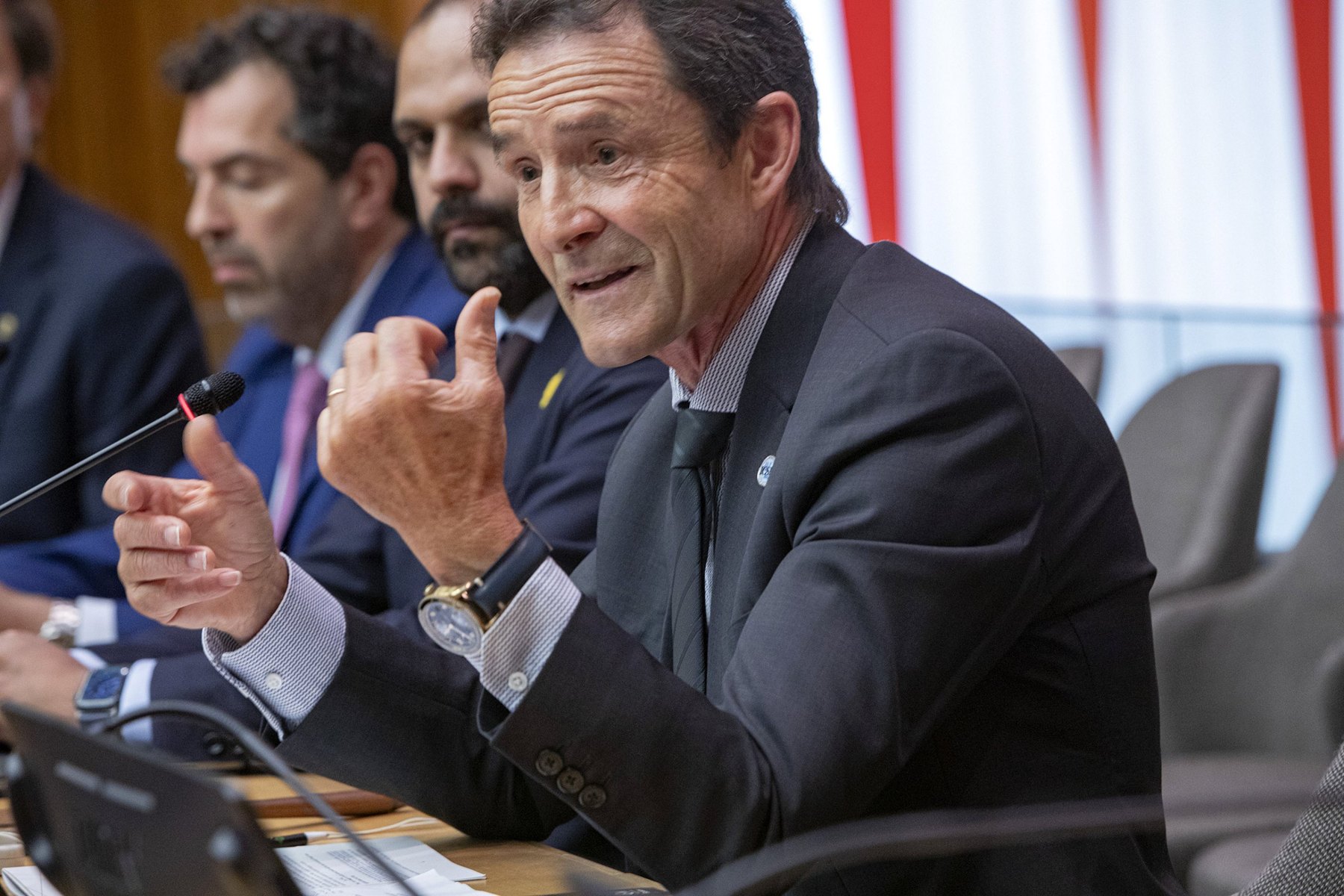
In the room
Strategy is a conversation.
Making a point at the conference table.
Chapter Five
{{pg.lead}}
{{pg.bold}}
{{pg.big}}
— {{pg.sign}}
Turn the page
Baldegger, R., Schmitt, C., & Bjelic, Z. (2027). Strategic sustainability: How human-centered entrepreneurship converts sustainable development goals into dynamic capabilities. In A. ElTarabishy & K.-C. Kim (Eds.), Human-Centered Entrepreneurship (pp. 69–84). Edward Elgar Publishing.