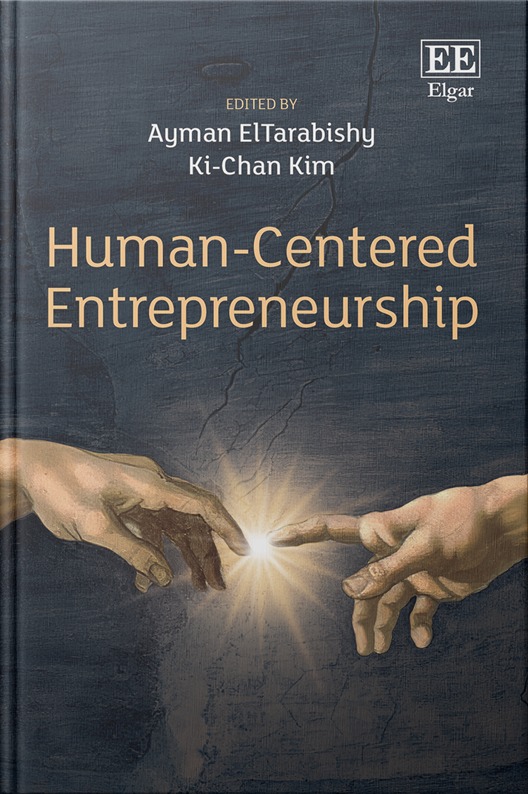
01
If you are building with AI.
You’ll see how three well-known AI companies stumbled, and which E each one dropped.
“The Analytical Engine has no power of originating anything. It can only do what we know how to order it to perform.”
01
If you are building with AI.
You’ll see how three well-known AI companies stumbled, and which E each one dropped.
02
If you are deciding what to automate.
You’ll see firms that used evidence, not hype, and kept the human touch where it mattered.
03
If you make policy.
You’ll get concrete levers: open data, education for the AI era, and rewards for humane firms.
From the book · the opening page
Human-Centered Entrepreneurship (HCE) has been demonstrated across manufacturing, services, and institutional contexts where technology serves rather than displaces human relationships. This chapter enters a different arena, one in which the technology itself is the subject of contest. Artificial intelligence does not merely alter how work is done; it challenges the premise that human judgment, empathy, and ethical reasoning remain central to entrepreneurial practice. The tension between what technology can do and what people must remain responsible for is sharper here than in most entrepreneurial contexts. The answer the evidence points toward, however, is consistent with the broader HCE literature: the Three E’s do not bend to the technology of the era.
They hold.
The other half of the title
The chapter defines evidence-based entrepreneurship as making decisions explicitly guided by the best available empirical evidence (Pfeffer & Sutton, 2006). Choose how a decision gets made.
{{basis.kicker}}
{{basis.head}}
{{basis.text}}
Risk of bias and untested assumptions
Ability to explain the decision to others
An illustration of the chapter’s argument, not measured data.
Three cautionary tales
The chapter reads three episodes from the AI industry through the Three E’s. Choose one.
What happened
{{tale.what}}
Sources cited in the chapter: {{tale.src}}
The E that gave way
{{tale.e}}
{{tale.lesson}}
Getting it right
The chapter maps each company’s choices onto Empathy, Enablement, and Empowerment. Choose a company.
{{k.e}}
{{k.text}}
{{s.big}}
{{s.t}}
{{ex.src}}
The hotel evidence
Hospitality studies give the case numbers. Each bar is a standardized path coefficient (β): the larger it is, the stronger the link.
{{hotel.src}}
{{r.label}}β = {{r.v}}
{{hotel.note}}
What to do on Monday
{{r.n}}
{{r.t}}
Open questions
JOBS
How is generative AI reshaping job structures, skills, and who does the work?
DECISIONS
How do entrepreneurs combine AI-generated insight with their own judgment?
ETHICS
What keeps transparency and accountability intact as AI takes on more?
CONTEXT
Does the model hold across cultures, industries, and firms of every size?
Chapter Eight
{{pg.lead}}
{{pg.bold}}
{{pg.big}}
— {{pg.sign}}
Turn the page
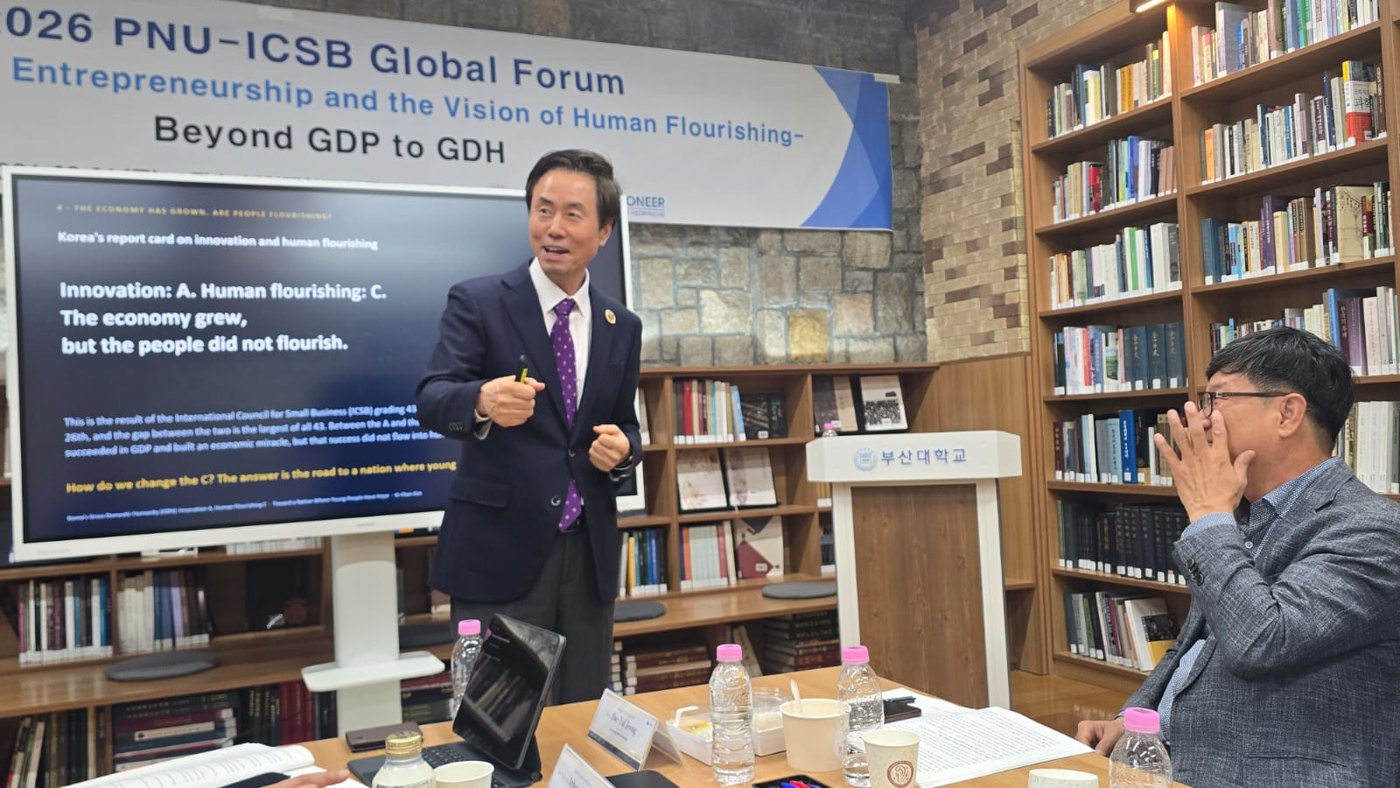
“AI as a powerful complement rather than a substitute for essential human attributes.”
About the authors
{{a.role}}
{{a.bio}}
Suh, J., Kim, K.-C., & ElTarabishy, A. (2027). Evidence-based human-centered entrepreneurship: Exploring the human–AI nexus. In A. ElTarabishy & K.-C. Kim (Eds.), Human-Centered Entrepreneurship (pp. 114–126). Edward Elgar Publishing.